

Few foods have shaped humanity as deeply — or as quietly — as bread. Long before it became something we grab sliced and wrapped from a supermarket shelf, bread was survival, culture, and belief baked into one.
The earliest known flatbreads were made 14,400 years ago by hunter-gatherers in what is now Jordan — thousands of years before agriculture began. Bread didn’t follow farming. It helped cause it. Turning wild grains into flatbreads may have nudged humans toward cultivation, settlement, and a radically new way of life.
As agriculture spread, bread became more than food. It became meaning.
Across early civilisations, bread was tied to land, fertility, and the Earth itself. In Sumerian, bread was Nin-da — Nin, meaning woman or goddess. The Earth was seen as a nurturing mother, feeding her children. The Greek goddess Demeter was crowned with wheat. In Egypt, bread is traditionally called Aish (or eish), which translates to “life,” reflecting its central role as a sacred, essential, and daily staple since ancient times.
When belief shifted from many gods to monotheism, the symbolism of bread did not disappear — it endured.
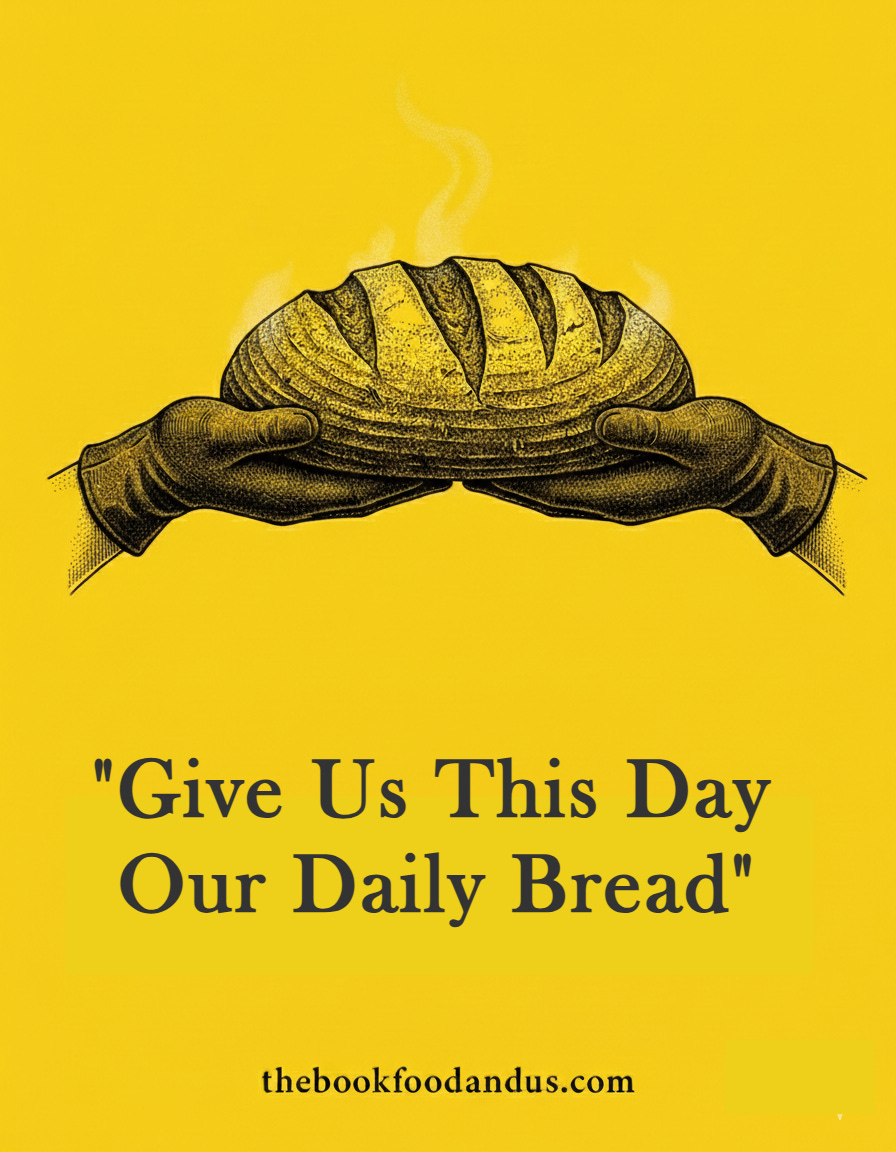
Bread appears hundreds of times in the Bible and becomes central to ritual and meaning. In Christianity, Jesus declares himself “the bread of life.” In Judaism, unleavened bread marks liberation. Even Bethlehem translates as “House of Bread.” That name is highly symbolic in Christianity, as Jesus Christ — the “Bread of Life” (John 6:35) — was born there.
Across cultures, bread wasn’t just eaten — it was revered. And it was everywhere.
In Roman times, cereals supplied up to 70% of daily calories. Flatbreads doubled as plates. When Virgil’s Aeneas jokes, “Look! We’ve even eaten our plates!”, he isn’t exaggerating. Bread and milling shaped labour, power, and language itself: in Old English, lord meant loaf-keeper and lady, loaf-kneader.
Every civilisation had its bread.
Mantou in China. Tortillas in Mesoamerica. Rye breads in northern Europe. Naan baked in clay ovens in India. Even the world’s first snack food — the pretzel — appeared around 610 CE.
For most of history, bread was simple: flour, water, salt, yeast, and time.
Then came industry.
In the late 19th and early 20th centuries, advances in milling, microbiology, and mechanisation transformed bread from a local craft into a mass-produced product. In the United States, bread went from 90% home-baked to 94% factory-baked in just forty years. “Wonder Bread” promised something no home kitchen could match: whiter, softer, sliced, wrapped — modern.
Britain followed a similar path, with one notable interruption.
During World War II, the UK introduced the National Loaf to conserve wheat and flour shipments from Canada. It was darker, denser, more nutritious — and deeply unpopular. Nicknamed “Hitler’s Secret”, it disappeared as soon as rationing ended.
At the same time, bread was also being reshaped upstream — at the mill.
Traditional stone grinding, which crushed the whole grain in a single pass, had been replaced by mechanised steel roller mills. Introduced in the late 19th century and refined by the 1920s, this gradual reduction system milled wheat in stages, separating the starchy endosperm from the bran and germ to produce fine white flour more efficiently. The result was bread that looked purer and lasted longer, but much of the grain’s fibre, wheat germ, natural oils, micronutrients, and natural flavour were left behind.
From that point on, much of bread-making would focus not on preserving what milling removed, but on engineering ways to compensate for it.
Another decisive moment came in 1961 with the Chorleywood Bread Process.
Instead of time and fermentation, Chorleywood used speed, energy, hard fats, emulsifiers, enzymes and amylase, oxidising agents, and extra water. Dough could be mixed, baked, sliced, and wrapped in hours rather than days. The result? Bread that was softer, cheaper, and longer lasting.
Today, over 80% of bread in Britain is made this way.
What’s less visible is how much of this process doesn’t appear on the label. Enzymes and amylase are classified as processing aids and don’t need to be declared on ingredient lists. The loaf looks familiar. The method is not.
Decades later, nutrition science would give foods made this way a name: ultra-processed.
Which brings us to the question bread now forces us to ask.
What do we value in our daily bread?
Is it height and squishiness?
Is it price and convenience?
Or nutrition, whole-grain goodness, and the integrity of the food itself?
For most of human history, bread connected us to land, labour, and each other. Today, it mostly connects us to efficiency and price.
And perhaps the question that matters most is this:
What do we want our daily bread to nourish — just our wallets, or our bodies as well?
This longer story — of how food quietly reshapes bodies, cultures, and power — is explored throughout Food & Us: The Incredible Story of How Food Shapes Humanity
Thanks for the post! Glad to see the spotlight on bread, including spirituality and cultural context.
I spend my days pondering over bread, and wheat in particular,
In part because it is one of the top commodity grain crops.
Can I share my observations with you please?